
From rigid PC shells to multi-material protective structures, HuaRui provides custom plastic injection molding for consumer electronics accessories and selected plastic products. Our molding capabilities support new OEM product development, existing mold transfers and repeat mass-production programs.
Plastic Injection Molding for Protective Cases & Consumer Products
Product-Focused Injection Molding
Injection molding requirements vary significantly between products. A clear phone case requires different material and appearance control from a rugged multi-layer case. A precision internal frame requires different dimensional priorities from a decorative exterior component.
Our engineering and production teams evaluate each project according to its product structure, material behavior, cosmetic requirements, assembly method and expected order volume. This allows us to establish a molding process suited to the actual application instead of applying the same production settings to every part.
We focus particularly on protective cases and consumer electronics products, where accurate fit, controlled appearance and repeatable production are essential.
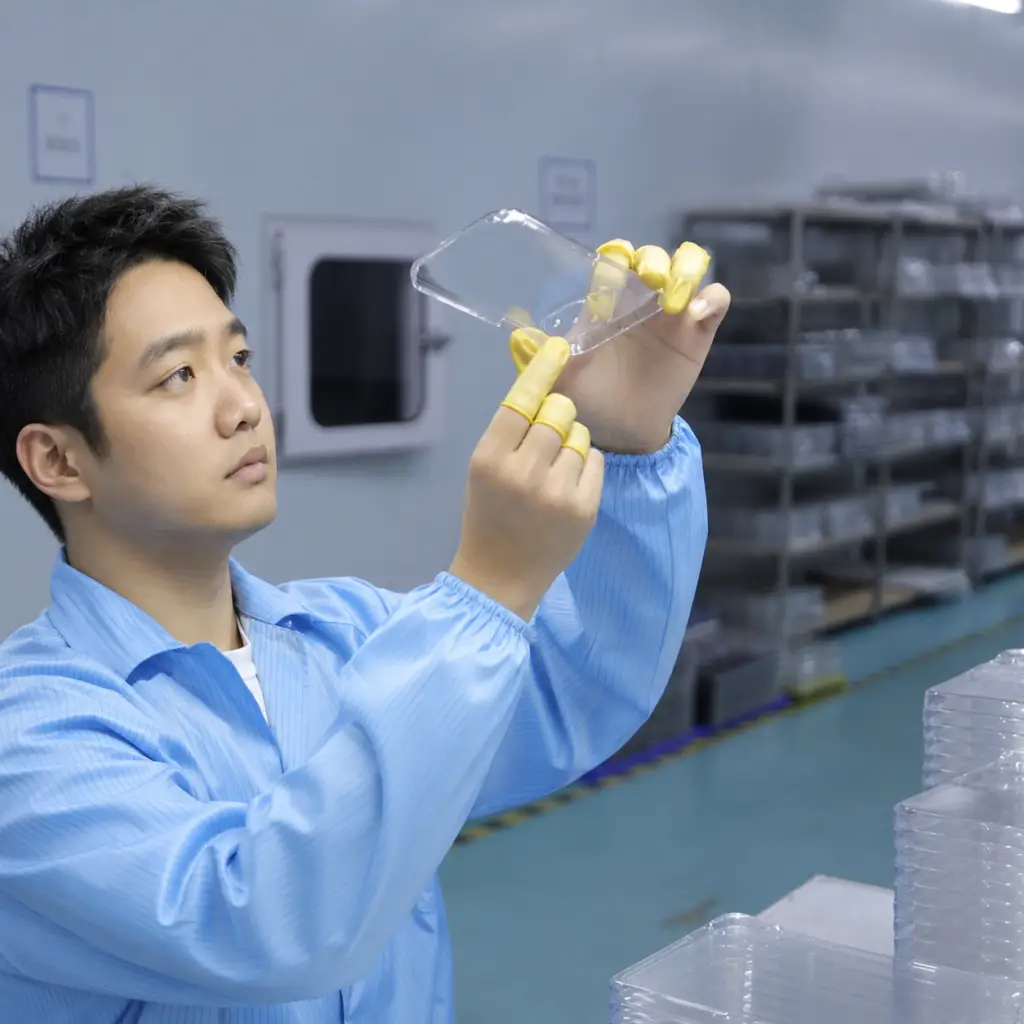
Products and Applications We Manufacture
Protective Phone Cases
Plastic injection molding is used to manufacture the functional and protective structure of many phone case designs.
Our applications include:
▪️ Rugged protective cases
▪️ Clear protective cases
▪️ Hybrid PC and TPU cases
▪️ MagSafe-compatible case structures
▪️ Internal frames for leather-wrapped cases
▪️ Insert and interchangeable backplate structures
Tablet and Device Cases
Larger protective products require careful control of deformation, wall thickness and assembly fit.
Applications include:
▪️ Tablet protective shells
▪️ Reinforced corners and bumpers
▪️ Foldable case frames
▪️ Internal support structures
▪️Multi-part protective housings
Consumer Electronics Components
We also support custom-molded parts for consumer electronics and accessory products.
Typical applications include:
▪️ Plastic housings and covers
▪️ Structural frames
▪️ Functional brackets
▪️ Buttons and small components
▪️ Decorative external parts
▪️ Insert-molded components
Consumer and Industrial Products
Projects outside the protective-case category are evaluated according to their design, material, tooling and production requirements.
Suitable projects may include:
▪️ Protective card cases
▪️ Custom plastic enclosures
▪️ Plastic covers and frames
▪️ Small functional plastic parts
▪️ Multi-component assemblies
Have a different plastic product? Send us your drawing for a manufacturing review.
Our Plastic Injection Molding Capabilities
Single-Material Injection Molding
Single-material molding is suitable for rigid shells, flexible protective components, internal structures and other standalone plastic parts.
Material selection and molding parameters are determined according to the required rigidity, flexibility, impact resistance, transparency, surface appearance and assembly function.
Plastic Overmolding
Overmolding combines two compatible materials or components into one integrated structure.
For protective products, a rigid plastic component can provide structural support while a softer outer material improves shock absorption and grip. Proper bonding, mold positioning and material compatibility must be considered during product and tooling development.
Typical applications include:
- PC and TPU protective cases
- Reinforced corners
- Multi-material buttons and components
Multi-Shot Molding
Multi-shot molding can integrate different colors, materials or functional zones into a single product.
This process can reduce separate assembly operations and create a more integrated product structure. Mold accuracy and process stability are especially important because each molding stage must align correctly with the previous stage.
HuaRui’s capabilities include two-shot and triple-shot molding for suitable product designs.
Insert Molding
Metal, plastic or other compatible inserts can be positioned in the mold and integrated into the plastic part during molding.
Insert molding may be used for:
- Reinforcement components
- Functional connection points
- Embedded structural elements
- Magnetic accessory structures
- Components requiring reduced secondary assembly
Insert feasibility depends on the product structure, insert material, positioning method and molding temperature.
IMD and IML Integration
For products requiring integrated graphics or decorative surfaces, in-mold decoration can combine molding and decoration in one manufacturing process.
Detailed information about film printing, forming, positioning and decorative quality control should be presented on the separate IML/IMD Manufacturing page.
Controlling Common Injection-Molding Defects
Warpage and Deformation
Large surfaces, uneven wall thickness and unbalanced cooling can cause a part to deform after molding.
Control begins with product and mold design, followed by appropriate material selection, filling conditions, holding pressure and cooling control.
This is particularly important for:
- Tablet case shells
- Large PC back covers
- Thin protective cases
- Parts that must align with other components
Short Shots and Incomplete Filling
Thin walls, long flow paths or unsuitable processing parameters can prevent the mold cavity from filling completely.
Gate design, venting, material flow, injection speed and pressure must be evaluated together to achieve complete and repeatable filling.
Flash and Parting-Line Variation
Flash may affect product appearance, assembly and handling.
Tool condition, clamping force, mold alignment and processing pressure are monitored to maintain clean edges and consistent parting lines.
Flow Marks, Weld Lines and Sink Marks
These appearance defects can be influenced by wall thickness, rib design, gate position, material temperature and cooling conditions.
For exterior consumer products, cosmetic requirements should be identified before tooling and documented with approved appearance standards.
Color Variation
Color consistency can be affected by raw-material batches, colorant preparation, temperature and production conditions.
Approved color samples and controlled material preparation provide the reference for mass production.
Fit and Dimensional Variation
Protective cases must align with device dimensions, buttons, camera openings, connectors and assembled components.
Critical areas are identified during engineering review and monitored during sampling and production.
Quality Control During Molding
Quality control is integrated into the production process rather than limited to a final inspection.
- Incoming Material Verification
- First-Article Inspection
- In-Process Inspection
- Appearance Inspection
- Dimensional and Fit Inspection
- Final Inspection

Frequently Asked Questions
Our primary applications include phone cases, tablet cases, protective case frames, clear PC shells, TPU bumpers, hybrid protective structures, consumer electronics housings and selected custom plastic components.
Project feasibility is evaluated according to the part design, material, tooling and production requirements.
Which plastic materials can you mold?
PC and TPU are commonly used for our protective-case projects. Other engineering thermoplastics can be evaluated according to the product’s functional, cosmetic and processing requirements.
Please provide the required material specification or performance requirements for confirmation.
Yes. PC and TPU can be combined in hybrid or overmolded protective structures where the rigid section provides support and the flexible section provides impact absorption and grip.
Material compatibility and the product connection structure must be evaluated before tooling.
Yes. HuaRui supports DFM review, mold design, mold manufacturing, trial molding and optimization.
Detailed tooling information is available on our Mold Design & Precision Tooling page.
Yes, suitable products can be evaluated for two-shot, triple-shot or overmolding production. Feasibility depends on the materials, part structure, required bonding and tooling design.
Yes, suitable
Existing mold transfers can be reviewed. We will need the mold specifications, drawings, production history and available samples to evaluate machine compatibility and mold condition.
A mold inspection or trial may be required before mass production.
Yes, suitable products can be evaluated for two-shot, triple-shot or overmolding production. Feasibility depends on the materials, part structure, required bonding and tooling design.
Yes. Please provide the product drawing, mold information, material grade, defect photos and current molding conditions.
Our engineering team can review issues such as warpage, incomplete filling, flash, sink marks, flow marks, assembly variation and inconsistent appearance. The possible solution will depend on whether the cause relates to product design, tooling, material or processing.
MOQ depends on the product, material, color, tooling and manufacturing process. For many protective-case projects, the standard requirement is approximately 1,000 pieces per model per color, subject to project confirmation.
Lead time depends on material availability, order quantity, secondary operations and packaging. For established projects, mass production commonly requires approximately 25–30 days after sample approval, subject to the final production plan.
New tooling projects require additional time for engineering, mold manufacturing, trials and sample approval.
For the most accurate evaluation, provide a 3D file, 2D drawing, material requirements, surface-finish requirements, expected quantity and product application.
If drawings are unavailable, send clear photos, dimensions and a description of the required function.